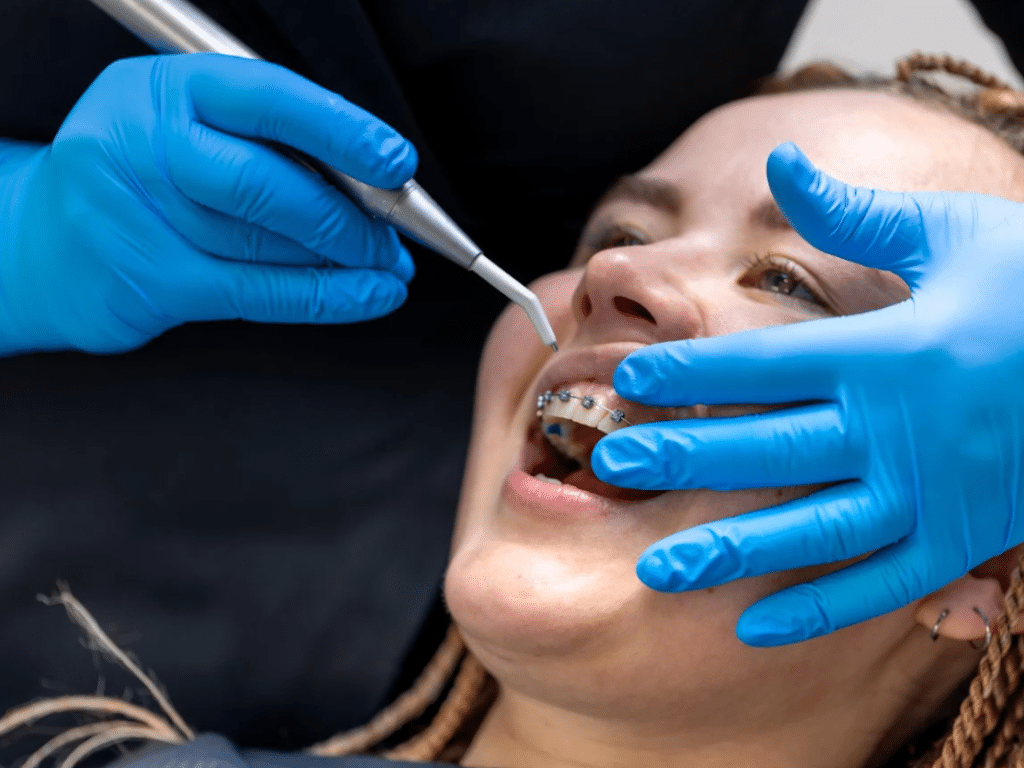
Embarking on orthodontic treatment is a transformative journey. It is an investment of time, finances, and effort that promises a lifetime of confidence. However, the period spent in braces presents a unique biological challenge. The brackets and wires used to align teeth create complex physical barriers that disrupt the mouth’s natural self-cleaning mechanisms. For patients in Hamilton, managing this “hardware” requires a shift in mindset from casual brushing to meticulous maintenance. If hygiene is neglected, the result can be swollen gums, cavities, or permanent “white spot” scars. This article serves as a definitive manual for navigating oral care with braces, ensuring that the smile revealed at the end of treatment is healthy, strong, and spotless.
Introduction
Life in Hamilton is vibrant and fast-paced. Whether you are rushing to classes at McMaster University, commuting down the Claremont Access for work, or enjoying a weekend on Locke Street, finding time for an elaborate dental routine can feel burdensome. Yet, the presence of braces raises the stakes significantly. Food particles that once slipped away easily are now trapped against the enamel by metal and ceramic components.
When plaque accumulates around brackets, it produces acid that demineralizes the tooth surface. In a city known for its diverse culinary scene, navigating dietary choices and hygiene on the go is essential. This guide breaks down the specialized tools, angulated brushing techniques, and flossing protocols necessary to keep your teeth pristine. By integrating these strategies into your daily routine, you can prevent the common pitfalls of orthodontic treatment and ensure your time in braces is as efficient and effective as possible.
1. Assembling Your Orthodontic Arsenal
Descriptive Paragraph Standard dental tools are often insufficient for the topography of a mouth with braces. The wire acts as a fence, blocking access to the gumline, while brackets create undercuts where bacteria thrive. To combat this, you need a specialized toolkit. Think of this as upgrading your maintenance gear. Having the right instruments on hand—both in your bathroom cabinet at home and in a portable kit for school or work—removes the friction from the process and ensures you are never caught unprepared after a meal.
- Electric Toothbrush: Invest in a high-quality electric toothbrush with an oscillating head; the vibration helps dislodge food particles that manual brushing might miss.
- Ortho-Cut Bristles: If using a manual brush, select one with a “V-shaped” bristle cut, designed so the shorter middle bristles clean the bracket while the longer outer bristles reach the tooth.
- Superfloss: Purchase pre-cut orthodontic floss (like Oral-B Superfloss) which features a stiffened end for threading and a spongy section for cleaning wide spaces.
- Floss Threaders: Stock up on plastic floss threaders, which act like a needle to guide standard floss behind the main archwire.
- Interproximal Brushes: Keep a supply of “Christmas tree” shaped brushes (Proxabrushes) to clean underneath the wire and between brackets.
- Water Flosser: A water flosser is indispensable for blasting debris out of hard-to-reach areas, though it should be used in addition to, not instead of, string floss.
- Dental Mirror: Use a small, angled dental mirror to inspect the back molars and the tongue-side of your teeth to ensure no plaque is left behind.
- Disclosing Tablets: Occasionally use chewable disclosing tablets that dye plaque pink or blue, highlighting the areas you are missing (usually around the bracket wings).
- Travel Pouch: Create a dedicated “on-the-go” bag with miniature versions of these tools to keep in your backpack or purse.
2. The 45-Degree Angulation Technique
Descriptive Paragraph Brushing with braces is a geometry problem. If you brush straight on, the bristles will simply hit the horizontal wire and bounce off, leaving the critical zones—the crescent of tooth above and below the bracket—untouched. This leads to the formation of a “plaque halo.” To clean effectively, you must master the 45-degree angle. This technique takes longer than your pre-braces routine, requiring patience and a systematic approach to ensure every surface is scrubbed.
- The Top-Down Angle: Start by placing the toothbrush bristles above the bracket, angling them down at 45 degrees to sweep between the hardware and the gumline.
- The Bottom-Up Angle: Invert the brush and place it below the bracket, angling upwards to clean the underside of the wire and the bracket base.
- Direct Brushing: Brush the face of the brackets directly to remove large food particles, but remember this does not clean the actual tooth surface effectively.
- Circular Vibrations: Use small, gentle circular motions rather than long, aggressive horizontal scrubbing, which can irritate the gums and damage the enamel.
- The Ten-Second Rule: Spend at least 10 seconds on each pair of teeth to ensure you have thoroughly disrupted the biofilm.
- Don’t Forget Lingual Surfaces: The back (tongue side) of your teeth has no brackets but is prone to tartar buildup; brush these surfaces as you normally would.
- Occlusal Surfaces: Scrub the chewing surfaces of your molars vigorously, as the metal bands around these teeth can create crevices that trap food.
- Gumline Focus: Pay close attention to where the tooth meets the gum; if this area is neglected, the gums will swell and grow over the brackets (hyperplasia).
3. Mastering the Art of Threading Floss
Descriptive Paragraph Flossing is universally cited as the most frustrating task for orthodontic patients, yet it is non-negotiable. The archwire prevents you from snapping floss down between teeth, meaning you must thread the floss under the wire for every single gap. Failure to do this leads to interproximal decay (cavities between teeth). While the process is tedious initially, developing muscle memory will eventually make it a quick part of your nightly routine.
- Waxed is Best: Use waxed floss rather than unwaxed, as it is less likely to shred or catch on the metal hooks and cleats of your brackets.
- Thread First: Insert the stiff end of the Superfloss or threader under the archwire before attempting to go between the teeth.
- The “C” Shape: Once the floss is between the teeth, wrap it in a “C” shape around the side of the tooth and slide it gently under the gumline.
- Clean Both Sides: Remember that each gap has two tooth surfaces; clean the side of the left tooth and the side of the right tooth before removing the floss.
- Re-thread Every Time: You cannot “jump” the floss over the wire; you must pull it out, re-thread it under the wire, and move to the next space.
- Be Gentle: Do not snap the floss down aggressively, as your gums may be more sensitive and prone to bleeding during treatment.
- Mirror Work: Stand close to the mirror with good lighting to ensure you are threading correctly and not poking your gums.
- Once a Day: You only need to perform this deep flossing once a day, preferably at night, to ensure teeth are clean for the duration of your sleep.
4. Utilizing Interdental (Proxa) Brushes
Descriptive Paragraph For the spaces where a toothbrush is too bulky and floss is too thin, the interdental brush is the perfect solution. These small, pine-tree-shaped brushes are designed to slide vertically behind the archwire and between the brackets. They are incredibly effective at removing the “bulk” debris that gets stuck immediately after eating. For many Hamilton residents, carrying a Proxabrush is the secret to maintaining dignity during social meals.
- Size Matters: Ask your orthodontist to recommend the correct size for your teeth; if the brush is too wide, forcing it can damage your gums.
- Vertical Motion: Slide the brush under the wire and move it up and down against the sides of the brackets to remove plaque.
- No Toothpaste Needed: You generally use these brushes dry or dipped in mouthwash; using toothpaste on them can be messy and unnecessary.
- Bend the Neck: You can bend the wire neck of the brush to better access the back molars without stretching your cheek uncomfortably.
- Rinse Frequently: Rinse the brush under the tap after every few teeth to wash away the food particles you have dislodged.
- Replace Often: When the bristles become matted or the wire becomes flimsy, throw the brush away; a bare wire can scratch the enamel.
- Pocket Essential: Keep a capped Proxabrush in your pocket at all times for discrete cleaning after lunch or coffee.
- Gentle Insertion: If a gap is tight, do not force the brush; rely on floss for those specific contact points.
5. The Role of Water Irrigators (Waterpiks)
Descriptive Paragraph A water flosser is a game-changer for anyone wearing braces. It uses a pressurized stream of pulsating water to flush out food particles, plaque, and bacteria. While it does not replace the mechanical scraping action of string floss, it is an excellent adjunct therapy. It is particularly effective at flushing out the “debris traps” around molar bands and soothing inflamed gums through hydro-massage.
- Start Low: Your gums may be tender; start on the lowest pressure setting and gradually increase it over a few weeks.
- Warm Water: Use lukewarm water in the reservoir, especially if your teeth are sensitive to cold due to recent adjustments.
- Trace the Anatomy: Follow the gumline of each tooth, pausing briefly between teeth to allow the water to flush the interdental space.
- Bracket Flushing: Trace around the perimeter of each bracket (top, bottom, and sides) to blast away stuck food.
- Orthodontic Tips: Purchase specialized “orthodontic tips” which have a small tapered brush on the end to scrub while you flush.
- Lean Over: To avoid a mess, lean over the sink and keep your lips slightly closed to let the water drain out of your mouth naturally.
- Mouthwash Boost: Add a capful of non-alcoholic mouthwash to the water reservoir for an extra antibacterial kick.
- Post-Meal Routine: A quick water floss after dinner can dislodge 90% of loose food before you begin your deep brushing session.
6. Navigating the Hamilton Food Scene
Descriptive Paragraph Hamilton offers incredible food choices, from the crusty pizza on King Street to the bagels in Westdale. However, braces require a modification of your diet. The mantra is to avoid “hard, crunchy, and sticky” foods. These textures can bend wires, pop brackets off teeth, and loosen bands. A broken bracket stops tooth movement and extends your treatment time. Hygiene is not just about cleaning; it is about preventing the mess in the first place.
- Avoid Sticky Sweets: Toffee, caramel, gummy bears, and chewing gum adhere to braces like glue and are nearly impossible to clean off completely.
- Modify Healthy Hard Foods: You don’t have to give up apples or carrots, but you must cut them into bite-sized pieces rather than biting into them.
- Beware of Popcorn: Popcorn hulls are notorious for getting lodged deep in the gumline, often causing painful abscesses; it is best avoided.
- Soft Crusts: Be careful with Hamilton’s famous Roma pizza crusts or bagels; tear them into pieces rather than tearing them with your teeth.
- Limit Sugary Drinks: Soda and energy drinks bathe the teeth in acid; with braces, this liquid pools around the brackets, accelerating decay.
- No Ice Chewing: This habit is the number one cause of broken brackets; stop chewing ice immediately.
- Embrace Soft Foods: Lean into pasta, smoothies, pierogies, and soups, especially in the days following a wire tightening.
- Water Rinse: If you do indulge in sugary foods, rinse your mouth vigorously with water immediately afterward to neutralize the pH.
7. Fluoride and Chemical Defense
Descriptive Paragraph Because mechanical cleaning is more difficult with braces, you need chemical reinforcements. Fluoride is a mineral that strengthens enamel and makes it more resistant to acid attacks. Using a fluoride rinse is essential for preventing “white spot lesions”—chalky squares that remain on teeth after braces are removed. These spots are permanent scars of early decay and can ruin the aesthetic result of your treatment.
- Alcohol-Free Options: Choose an alcohol-free fluoride rinse, as alcohol can dry out the mouth, and saliva is your natural defense against bacteria.
- Read the Label: Ensure the mouthwash explicitly says “anti-cavity” or “sodium fluoride,” not just “breath freshening.”
- Nightly Routine: The best time to rinse is right before bed, after you have brushed and flossed, so the fluoride stays on the teeth overnight.
- The 30-Minute Rule: Do not eat, drink, or rinse with water for 30 minutes after using fluoride mouthwash to allow it to absorb into the enamel.
- Phos-Flur Rinse: Ask your dentist about specialized rinses like Phos-Flur, which are specifically formulated for orthodontic patients to reduce scarring.
- Sensitivity Protection: If your teeth are sensitive, use a high-concentration fluoride toothpaste (like Sensodyne) to calm the nerve endings.
- Vigorous Swishing: Swish the liquid forcefully through your teeth to help dislodge any remaining microscopic food particles.
- Spit, Don’t Rinse: After spitting out the mouthwash, do not rinse with water; leave the residue on the teeth to work its magic.
8. Hygiene on the Go (School and Work)
Descriptive Paragraph Most of your meals happen away from home—at work, at McMaster, or in school cafeterias. You cannot leave food debris in your braces for eight hours until you get home; it looks unsightly and damages your teeth. You need a portable strategy. While you might not perform a full 10-minute floss session in a public bathroom, you need a routine to ensure you are “socially clean” and biologically safe.
- Travel Kit: Carry a small zipper pouch with a travel toothbrush, a small tube of paste, orthodontic wax, and a Proxabrush.
- The “Swish and Spit”: If you absolutely cannot brush, take a mouthful of water and swish it vigorously to dislodge loose food.
- Check the Mirror: Always check a mirror (or your phone camera) after eating; a piece of spinach caught in a front bracket is a rite of passage you want to avoid.
- Public Restroom Etiquette: Do not be embarrassed to brush in a public washroom; it shows you care about your health and appearance.
- Carry Elastics: If you wear rubber bands, keep a spare pack in your kit so you can replace them after lunch for fresh tension.
- Plastic Picks: Use plastic toothpicks rather than wooden ones, which can splinter and break off inside your brackets.
- Hydration: Drink water with your meal to help rinse food away naturally as you eat.
- Emergency Wax: Keep wax in your kit; sometimes a bracket can suddenly start rubbing your cheek, and you need relief to get through the day.
9. Dealing with Discomfort to Maintain Habits
Descriptive Paragraph Hygiene often suffers when a patient is in pain. After a wire adjustment, your teeth will be sore, and you might be tempted to skip brushing. Furthermore, poking wires or ulcers can make the act of brushing painful. However, keeping the mouth clean actually helps ulcers heal faster by reducing bacterial load. Managing the physical side effects of braces allows you to maintain your hygiene regimen without skipping a beat.
- Salt Water Rinses: If you have cuts or sores, rinse with warm salt water (one tsp of salt in a cup of warm water) to soothe tissue and prevent infection.
- Use Wax: Apply orthodontic wax to any bracket or wire that is poking; dry the bracket with a tissue first so the wax sticks.
- Soften Bristles: Run your toothbrush under hot water to soften the bristles if your gums are particularly tender after an adjustment.
- Topical Anesthetics: Use over-the-counter oral numbing gels on sore spots before you brush if the pain is preventing you from cleaning properly.
- Keep Brushing: Brushing increases blood flow to the gums, which speeds up healing; stopping will only make the inflammation worse.
- Manage Wires: If a wire pokes out, try pushing it back with a clean pencil eraser or cover it with wax until you can see your orthodontist.
- Pain Management: Take an over-the-counter pain reliever (like ibuprofen) an hour before your brushing routine if you have just had a tightening.
- Report Issues: If a band feels loose, call the office; food can get trapped under the band and cause massive decay rapidly.
10. The Critical Role of Professional Cleanings
Descriptive Paragraph Even with the best home care, it is inevitable that you will miss some spots. The calculus (tartar) that builds up around brackets creates a rough surface that holds even more plaque. Regular visits to your general dentist or hygienist at Nebo Dental Centre are more important now than ever. We can work around your wires to ensure your underlying gum health remains strong and spot early warning signs of decalcification that you might miss in the mirror.
- Maintain Schedule: Do not skip cleanings because you have braces; stick to your 6-month (or sometimes 3-4 month) schedule strictly.
- Wire Removal: Coordinate with your orthodontist; sometimes wires can be removed before your cleaning to allow the hygienist full access.
- Fluoride Varnish: Ask for a professional fluoride varnish application at every hygiene appointment for maximum protection.
- Ultrasonic Cleaning: Hygienists have specialized tools that can clean around the glue and metal without damaging the bond strength.
- Gum Monitoring: We measure your gum pockets to ensure the gums aren’t swelling excessively (hyperplasia), a common reaction in teens with braces.
- Technique Coaching: Your hygienist can see exactly where you are missing (e.g., lower right canine) and give you specific tips to correct it.
- Cavity Checks: We continue to monitor for cavities between teeth that are hard to see visually due to the metal hardware.
- Validation: We are here to support you; we know it is hard work, and we want to validate your effort and keep you motivated!
Conclusion
Navigating life with braces is a temporary challenge with a permanent reward. While the routine of threading floss and brushing at 45-degree angles may seem tedious, it is the insurance policy for your smile. Nothing is more disappointing than having braces removed to reveal straight teeth that are scarred by white spots or surrounded by puffy, bleeding gums.
By assembling the right toolkit, respecting the diet, and maintaining a disciplined hygiene routine, you ensure that your treatment stays on track and your results are spectacular. For the residents of Hamilton, taking these steps means that when the braces finally come off, your smile will be ready to light up the city—healthy, bright, and perfectly aligned.
Need Support on Your Orthodontic Journey?
Expert Hygiene Care for Your Best Smile.
Whether you are just starting your braces journey or need help maintaining your oral health during treatment, the team at Nebo Dental Centre is here to guide you. We specialize in helping patients in Hamilton keep their smiles healthy, straight, and bright.
Contact Nebo Dental Centre today:
Name: Nebo Dental Centre
Address: 260 Nebo Road, Hamilton, ON L8W 3K5
Phone: 905.381.9802
Email: [email protected]
Website: https://nebodentalcentre.com/
Protecting Your Future Smile, Today.
FAQs
-
A1: You should brush at least three times a day—morning, night, and after lunch. Ideally, you should brush after every meal or snack. If food sits in the brackets for hours, the acid production begins immediately, damaging the enamel.