Premise
This article explores the vital role of regular dental hygiene and professional examinations within the specific context of Hamilton’s healthcare landscape. It posits that preventative care is not merely an elective cosmetic service but a foundational health requirement that saves Hamilton residents from the physical discomfort and financial burden of advanced dental restorative work.
Introduction: Why Hamiltonians Prioritize Preventive Care
In the heart of the Golden Horseshoe, Hamilton residents are known for their resilience and hard-working nature. Whether you are commuting from the West Mountain to downtown or enjoying a weekend at Bayfront Park, your health is your greatest asset. Often overlooked in the hustle of daily life is the bedrock of oral health: the routine dental cleaning and checkup. In Hamilton, preventative dentistry has evolved from simple scaling to a comprehensive wellness screening. By visiting a local clinic like Nebo Dental Centre, patients engage in a proactive strategy to combat common issues such as “Steel City” stress-related tooth grinding and the hidden sugars in our favourite local cafe treats. This article details the essential components of a modern Hamilton dental visit, emphasizing that a few hours in a dentist’s chair annually can ensure a lifetime of functional, confident smiles.
1. The Professional Scaling and Polishing Process
The core of any dental cleaning in Hamilton is the removal of plaque and tartar (calculus) that regular brushing simply cannot budge. Even with the best electric toothbrush, certain areas behind the lower front teeth or around the back molars are prone to buildup. Professional scaling involves specialized instruments that gently vibrate or scrape away these hardened deposits, which are the primary cause of gum disease. Once the scaling is complete, a high-powered polish removes surface stains from coffee, tea, or red wine, leaving your teeth feeling exceptionally smooth.
- Ultrasonic Scaling: Uses sound waves to break up large tartar deposits quickly.
- Manual Curettes: Allow for precision cleaning in deep gum pockets.
- Prophy Paste: A gritty paste used to scrub away stubborn external stains.
- Interproximal Cleaning: Professional flossing that reaches depths home care misses.
- Air Polishing: A stream of pressurized water and powder for sensitive teeth.
- Gingival Irrigation: Flushing the gum line with medicated rinses to kill bacteria.
- Stain Assessment: Identifying if discolouration is surface-level or internal.
- Smooth Surface Benefit: Polished teeth make it harder for new plaque to stick.
2. Comprehensive Oral Cancer Screenings
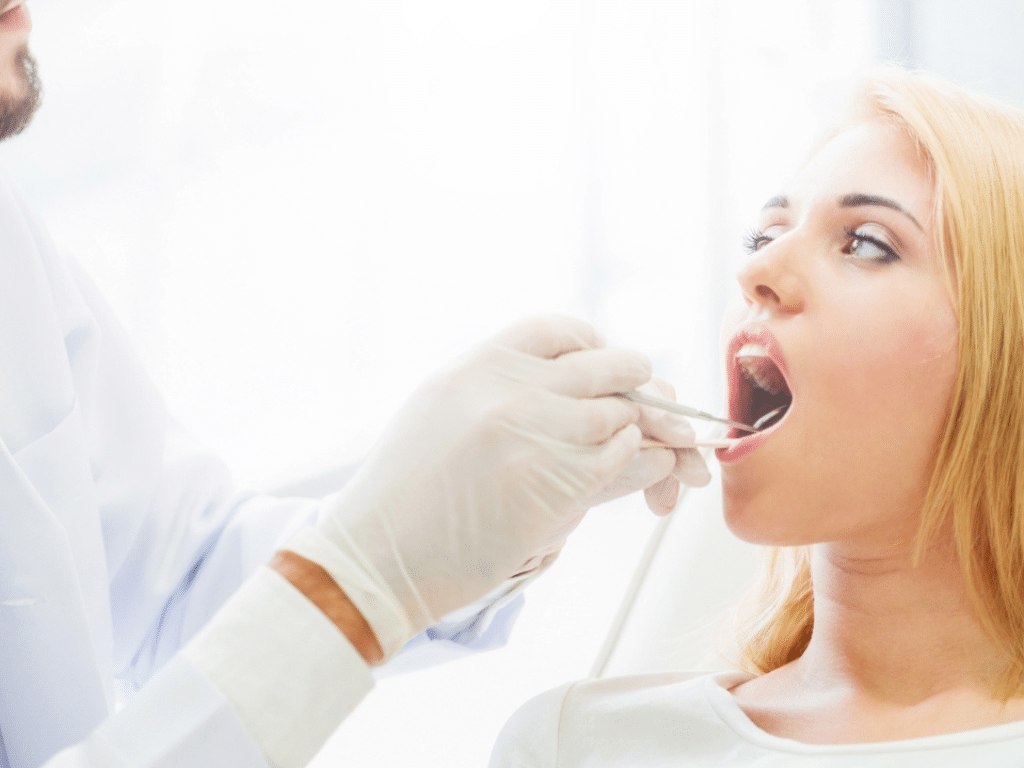
One of the most critical aspects of a checkup in Hamilton is the oral cancer screening. Your dentist isn’t just looking for cavities; they are looking for abnormalities in the soft tissues of the mouth, throat, and tongue. Early detection is life-saving, as oral cancer is often asymptomatic in its early stages. In a city with a diverse population and varying lifestyle factors, having a professional eye scan for red or white patches, lumps, or irregular tissue changes is a non-negotiable part of a bi-annual exam.
- Visual Inspection: Checking the roof of the mouth, back of the throat, and insides of cheeks.
- Manual Palpation: Feeling the neck and jawline for swollen lymph nodes or lumps.
- Tongue Examination: Pulling the tongue forward to check the lateral borders.
- Tissue Fluorescence: Using specialized lights to spot abnormal cell activity.
- Medical History Review: Discussing tobacco or alcohol use that may increase risk.
- Symptom Query: Asking about persistent hoarseness or difficulty swallowing.
- Biopsy Referrals: Coordinating with Hamilton specialists if suspicious spots are found.
- Patient Education: Teaching you how to perform a self-check at home.
3. High-Tech Diagnostic Imaging (Digital X-rays)
Modern Hamilton dental practices have transitioned away from traditional film to digital radiography. This technology allows for a much clearer view of what is happening beneath the enamel and under the gum line. X-rays are essential for detecting “hidden” problems like interproximal cavities (between teeth), bone loss, impacted wisdom teeth, or abscesses at the root tip. Because they are digital, these images are available instantly and involve significantly less radiation than older methods.
- Bitewing X-rays: Used to check for decay between the back teeth.
- Periapical X-rays: Focused on the entire tooth from crown to the end of the root.
- Panoramic Views: A 2D wrap-around image of the entire jaw and sinuses.
- Reduced Radiation: Digital sensors require up to 80% less radiation than film.
- Instant Enhancement: Ability to zoom and contrast images for better diagnosis.
- Bone Density Monitoring: Tracking the health of the jawbone over several years.
- Cyst and Tumor Detection: Identifying silent growths within the jawbone.
- Insurance Coordination: Digital files are easily shared for claim processing.
4. Gum Disease Assessment and Periodontal Probing
Gum disease, or periodontitis, is the leading cause of tooth loss in Canadian adults. During a checkup in Hamilton, your dental hygienist will use a periodontal probe—a tiny ruler—to measure the depth of the “pockets” between your teeth and gums. Healthy pockets are 1–3mm deep; anything deeper indicates that the gum is pulling away from the tooth due to infection or inflammation. Catching gingivitis (the early stage) allows for a total reversal, whereas advanced periodontitis requires more intensive management.
- Pocket Depth Recording: Creating a numerical map of your gum health.
- Bleeding Index: Noting areas that bleed during probing as signs of active infection.
- Recession Measurement: Tracking how much the gum line has shrunk back.
- Attachment Level: Determining how well the tooth is anchored in the bone.
- Furcation Analysis: Checking if bone loss has reached the “fork” in the tooth roots.
- Mobility Check: Testing if any teeth have become loose due to bone loss.
- Home Care Calibration: Tailoring flossing techniques to specific problem areas.
- Frequency Adjustment: Suggesting 3-month cleanings for those with active gum disease.
5. Cavity Detection and Restorative Review
The most traditional part of the dental checkup is the search for decay. Your Hamilton dentist examines each tooth surface using specialized tools and visual magnification. They also review the integrity of existing dental work. In Hamilton’s climate, where hot coffees and cold winter air can cause expansion and contraction of materials, old fillings can often leak or crack. Ensuring that previous investments in your smile are still holding up is a key part of preventative maintenance.
- Visual Inspection: Looking for dark spots, shadows, or chalky white lesions.
- Tactile Examination: Using an “explorer” tool to feel for soft spots in the enamel.
- Filling Integrity: Checking for gaps (margins) between the tooth and old fillings.
- Crown and Bridge Check: Ensuring prosthetic teeth are still seated correctly.
- Crack Detection: Using transillumination (light) to find hairline fractures.
- Secondary Decay: Looking for new cavities forming under old dental work.
- Sealant Evaluation: Checking if protective coatings on children’s teeth are intact.
- Attrition Monitoring: Observing wear patterns caused by tooth-on-tooth contact.
6. Oral Hygiene Education and Personalised Coaching
A dental appointment in Hamilton isn’t just about what the professional does; it’s about empowering the patient. Every mouth is different—some people have crowded teeth, while others have wide gaps or orthodontic appliances. Your hygienist provides a “personalized coaching session” to help you master the tools needed for your specific anatomy. This reduces the time you spend in the chair during your next visit and lowers your long-term dental costs.
- Brushing Technique: Demonstrating the Bass method (40-degree angle to the gum).
- Electric vs. Manual: Helping you choose the right tool for your dexterity.
- Flossing Alternatives: Introducing water flossers, interdental brushes, or floss threaders.
- Tongue Scraping: Explaining how to remove bacteria that causes bad breath.
- Product Recommendations: Suggesting specific toothpastes for sensitivity or enamel repair.
- Lifestyle Discussion: How habits like vaping or snacking affect oral pH.
- Disclosing Tablets: Using dye to show you exactly where you are missing plaque at home.
- Nutrition Tips: Identifying hidden sugars in “healthy” snacks like granola bars.
7. Fluoride Treatments and Enamel Protection
Fluoride is a naturally occurring mineral that is a powerhouse for preventative care. In many Hamilton dental offices, a concentrated fluoride varnish is applied after a cleaning. This treatment helps “remineralize” weak spots in the enamel before they become full-blown cavities. It is especially beneficial for patients with dry mouth, receding gums (exposing softer root surfaces), or those with a high history of decay.
- Varnish Application: A sticky coating that releases fluoride over several hours.
- Acid Resistance: Toughening the enamel against the acid produced by bacteria.
- Sensitivity Relief: Blocking the tiny tubules that lead to tooth nerves.
- Root Protection: Strengthening the cementum (root covering) for older adults.
- White Spot Reversal: Healing the very first signs of a cavity.
- Post-Cleaning Timing: Applying when teeth are cleanest for maximum absorption.
- Children’s Development: Ensuring adult teeth form with strong, dense enamel.
- Safe Dosages: Controlled professional application is safe and effective.
8. TMJ and Jaw Health Assessment
Hamiltonians are no strangers to stress, and stress often manifests in the jaw. During your checkup, the dentist will assess your Temporomandibular Joint (TMJ). They listen for clicking or popping, check for limited range of motion, and look for signs of “bruxism” (tooth grinding). Wear facets on the teeth or enlarged jaw muscles are tell-tale signs that you may need a night guard to prevent cracked teeth and chronic headaches.
- Palpation of Muscles: Feeling the masseter muscles for tension or soreness.
- Range of Motion: Measuring how wide you can comfortably open your mouth.
- Joint Sound Analysis: Checking for “crepitus” (grating) or clicking.
- Wear Pattern Mapping: Identifying flat spots on teeth caused by grinding.
- Bite Alignment: Seeing if your teeth meet evenly when you close.
- Night Guard Consultation: Discussing custom-made appliances for protection.
- Headache Connection: Exploring if your morning migraines are dental-related.
- Stress Management Advice: How physical therapy or relaxation can help the jaw.
9. Saliva and Dry Mouth (Xerostomia) Evaluation
Saliva is the mouth’s natural defense mechanism; it washes away food and neutralizes acids. Many residents in the Hamilton area take medications (for blood pressure, allergies, or depression) that list “dry mouth” as a side effect. During a checkup, your dentist evaluates your saliva flow. A dry mouth significantly increases the risk of rapid tooth decay and gum disease, requiring a specialized preventative strategy.
- Saliva Flow Testing: Checking the quantity and consistency of your spit.
- Medication Review: Identifying drugs that might be drying out your mouth.
- Hydration Strategies: Tips for maintaining moisture throughout the day.
- Saliva Substitutes: Recommending gels or sprays to mimic natural saliva.
- Xylitol Education: Using specific mints or gums to stimulate flow.
- pH Balancing: Rinses that keep the mouth from becoming too acidic.
- Increased Vigilance: More frequent checkups for those with severe dryness.
- Soft Tissue Comfort: Ensuring the cheeks and tongue aren’t sticking to teeth.
10. The Link Between Oral and Systemic Health
Modern dentistry in Hamilton acknowledges that the mouth is the gateway to the body. Research has linked chronic gum inflammation to heart disease, diabetes, and even respiratory issues. A dental checkup is a vital part of your overall healthcare routine. By keeping oral inflammation low, you are essentially reducing the inflammatory burden on your entire cardiovascular and immune systems.
- Diabetes Monitoring: Gum disease can make it harder to control blood sugar.
- Heart Health: Bacteria from the mouth can enter the bloodstream and affect the heart.
- Pregnancy Care: Preventative cleanings reduce the risk of pregnancy gingivitis.
- Respiratory Connection: Reducing oral bacteria helps prevent aspiration pneumonia.
- Inflammation Reduction: Lowering the “C-reactive protein” levels in the body.
- Health History Updates: Ensuring your dentist knows about new surgeries or conditions.
- Collaborative Care: Coordinating with your Hamilton family doctor if needed.
- Long-Term Vitality: Viewing your smile as an indicator of your total body wellness.
Conclusion: A Small Investment for a Lifetime of Health
A dental cleaning and checkup in Hamilton is far more than a “teeth washing.” It is a comprehensive diagnostic event that guards against cancer, bone loss, and systemic illness. In a city as vibrant as Hamilton, you want a smile that can keep up with your lifestyle—whether you’re cheering at a Ticats game or enjoying a meal on James Street North. By committing to regular preventative care, you choose the path of least resistance: fewer emergencies, lower costs, and a healthy, radiant smile that lasts.
Ready to book your preventative checkup? Contact Nebo Dental Centre today:
Name: Nebo Dental Centre
Address: 260 Nebo Road, Hamilton, ON L8W 3K5
Phone: 905.381.9802
Email: [email protected]
Website: https://nebodentalcentre.com/
Hamilton’s Foundation for a Lifetime of Brighter, Healthier Smiles.
FAQs
-
A1: Most people should visit every six months. However, if you have a history of gum disease, smoke, or have certain health conditions like diabetes, your dentist may recommend coming in every three to four months.