Premise:
Many patients delay visiting the dentist because they misinterpret advanced structural tooth damage or deep bacterial infections as minor, temporary cavities. Understanding the critical biological thresholds that separate a standard surface restoration from an endodontic root canal therapy allows individuals to recognize urgent warning signs early. By tracking specific patterns of pain, sensitivity, and structural changes, patients can make informed decisions, protect their natural teeth, and avoid severe systemic complications.
Introduction
It is a scenario played out in households across Canada every day: a sudden, sharp zinger while drinking a cold glass of water, or a dull, nagging ache after chewing a piece of food. The immediate, comforting assumption is almost always the same—it is probably just a small cavity. For many residents, the tendency to minimize dental discomfort is a common coping mechanism designed to delay an appointment. However, beneath the hard, protective layers of your tooth enamel lies a complex, highly sensitive living ecosystem. While a cavity and a root canal infection are fundamentally related stage-of-growth variations of bacterial decay, the clinical interventions required to treat them could not be more different. A cavity is a localized surface issue; a root canal issue means the living core of the tooth is actively dying or infected.
Failing to recognize when a dental issue has crossed the line from a surface breakdown to a deep-seated nerve emergency can have serious consequences. A standard cavity can be resolved in a single, non-invasive appointment with a composite filling. An infection that has breached the pulp chamber, however, requires endodontic therapy to save the tooth structure from extraction. Understanding the delicate transition between these two states is key to maintaining lifelong oral health. By monitoring how your teeth respond to temperature, pressure, and time, you can decipher the body’s warning signs. This comprehensive guide explores ten critical insights and warning signs that highlight the structural differences between a simple cavity and a necessary root canal procedure.
Ten Critical Insights and Warning Signs
1. The Nature of the Pain: Transient Sharpness vs. Persistent Throbbing
The character, rhythm, and duration of tooth pain provide the most immediate clues regarding how far decay has traveled. A standard cavity typically causes sharp, fleeting pain that is directly triggered by an external stimulus, such as sweet foods, cold beverages, or aggressive brushing, and it stops once the trigger is removed. This happens because the decay has eroded the enamel and exposed the dentin, but has not yet reached the nerve. In contrast, a tooth that requires a root canal produces a deep, continuous, throbbing ache that persists long after any external trigger is gone. This spontaneous pain often strikes out of nowhere, pulsing in sync with your heartbeat. This constant throbbing indicates that the internal pulp chamber is highly inflamed and under intense pressure, meaning the nerve is actively struggling to survive a bacterial invasion.
2. Prolonged Thermal Sensitivity That Lingers for Minutes
While both cavities and root canal emergencies cause sensitivity to hot and cold temperatures, the timeline of the reaction is a major diagnostic differentiator. When you have a simple cavity, contact with an icy drink or hot coffee causes a brief flash of discomfort that resolves within a few seconds as your saliva normalizes the temperature. However, if the internal nerve tissue has become irreversibly damaged or infected, the response to temperature is much more severe. The pain from a hot or cold beverage will linger for thirty seconds, several minutes, or even hours after you finish the drink. In advanced stages, heat can cause the gases produced by internal bacterial decay to expand within the sealed tooth, creating intense pressure that can only be temporarily numbed by holding ice water directly against the tooth.
3. Discomfort and Acute Pain Linked to Chewing and Direct Pressure
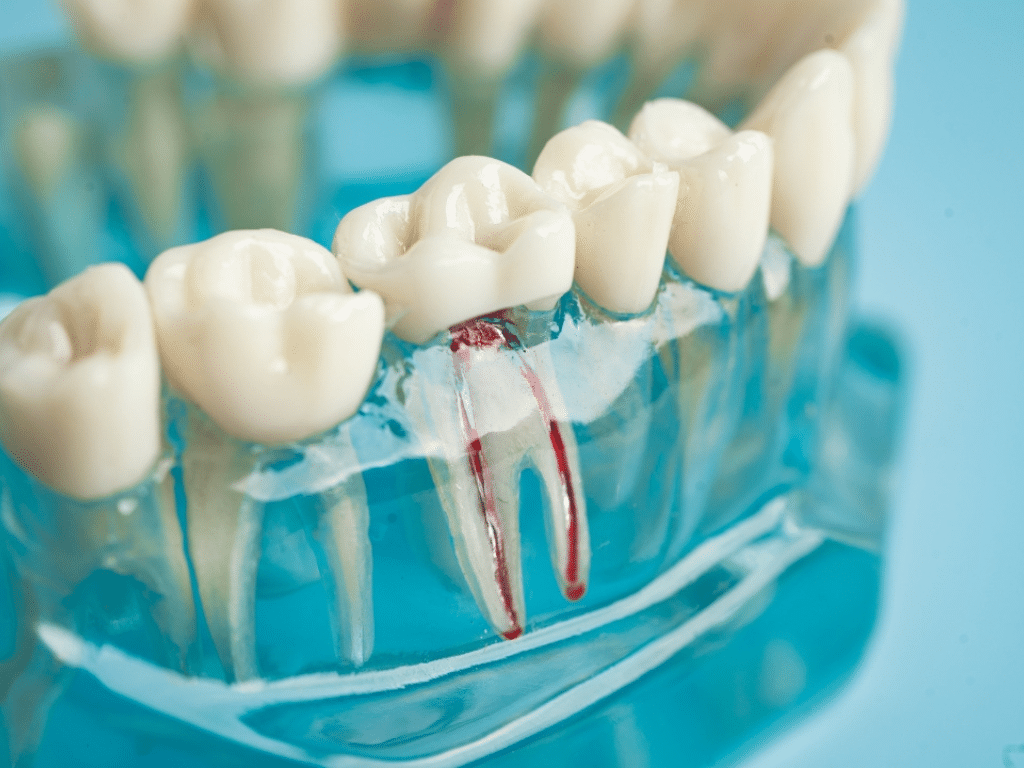
Experiencing pain when biting down or applying direct pressure to a tooth indicates that inflammation has moved beyond the hard internal structures and into the surrounding support network. A superficial cavity may occasionally feel slightly uncomfortable if hard food debris is pressed directly into a physical hole in the enamel. However, when a tooth requires a root canal, the act of biting down can cause sharp, debilitating pain. This occurs because the bacterial infection inside the pulp chamber has travelled down the root canals and leaked out through the root tip, deeply inflaming the periodontal ligament that anchors the tooth to the jawbone. When this tissue becomes inflamed, even light pressure from your tongue or touching the tooth with a finger can cause severe discomfort, showing that the infection is spreading into the surrounding bone.
4. Spontaneous Discomfort That Awakes You from Deep Sleep
One of the most reliable indicators of a serious endodontic issue is pain that disrupts your sleep. During the day, our bodies are upright, and the constant sensory input of daily life can somewhat distract us from a mild dental ache. Furthermore, staying upright keeps blood pressure in the head relatively stable. When you lie down flat to sleep, the shifting blood flow increases pressure within the vessels of the head and neck, which significantly increases fluid pressure inside an inflamed, enclosed tooth pulp chamber. If a cavity is the only issue, changing your posture will rarely cause a severe pain spike. If you are frequently awakened in the middle of the night by a pounding, uncontrollable toothache that does not respond to over-the-counter pain medications, the nerve is likely experiencing irreversible damage that requires immediate root canal therapy.
5. Structural Discoloration and Darkening of the Enamel
Keeping a close eye on visual changes in your smile can reveal deep structural damage that may not be completely obvious through feel alone. A standard cavity often looks like a localized, chalky white spot, a small brown groove, or a distinct black dot on the chewing surface of the tooth. However, when an internal infection causes the living pulp tissue inside the tooth to die, the entire tooth can begin to change color from the inside out. As the internal blood vessels break down, necrotic debris and iron pigments soak into the porous dentin layer, giving the enamel a dull, bruised, grey, or dark yellowish appearance. This structural discoloration is very different from everyday surface stains from coffee or tea, as it cannot be brushed away or corrected with external whitening gels, signaling that the inner chamber requires thorough cleaning.
6. Swelling, Tenderness, and Changes in the Nearby Gum Tissue
Looking closely at the gum tissue surrounding a painful tooth can help you identify exactly where an infection is located. With a standard cavity, the adjacent gums generally remain pink, firm, and healthy, unless food debris has become trapped between the teeth. When a tooth infection advances to a stage that requires a root canal, the surrounding gum tissue often shows clear signs of distress. The gums near the root of the affected tooth may become red, swollen, tender to the touch, and visibly puffy. This swelling can spread into the cheek or jawline, indicating that the body’s immune system is actively fighting a significant bacterial backup that has broken through the tooth’s boundaries and entered the soft tissues of the mouth.
7. The Presence of a Persistent Dental Abscess or “Gum Pimple”
The appearance of a small, raised bump on your gums—often resembling a minor pimple or boil—is a clear sign that you need endodontic treatment rather than a simple filling. Known clinically as a fistula or a parulis, this bump serves as a drainage exit for a dental abscess that has formed at the base of the tooth’s root. As bacteria destroy the pulp, white blood cells and necrotic fluid accumulate, building up intense pressure inside the jawbone. The body creates a small drainage channel through the bone and gum tissue to relieve this pressure. While this drainage can sometimes cause the throbbing pain to temporarily decrease, it means the infection is actively draining into your mouth, causing a persistent bad taste and foul breath. This issue will not resolve until the internal source of infection is entirely removed through a root canal.
8. Unexplained Tenderness in the Jawbone and Localized Lymph Nodes
A surface cavity is entirely contained within the hard, upper crown of the tooth, meaning it cannot cause pain or swelling in the wider structures of your face or neck. However, an untreated root canal infection can easily cross these boundaries. As bacteria continue to multiply at the root tip, the surrounding jawbone becomes deeply inflamed, making the entire quadrant of your face tender to the touch. This ongoing inflammation frequently causes the submandibular lymph nodes under your jawline to become swollen, firm, and tender as your immune system tries to contain the infection. If you notice that touching your jawbone or the side of your neck causes a dull ache, the dental infection has progressed past a localized cavity and requires professional endodontic treatment.
9. Structural Weakening, Deep Fractures, and Missing Fillings
The physical integrity of a tooth often dictates the type of dental treatment required to restore it. A basic cavity causes a small, localized loss of enamel that leaves the rest of the tooth’s structure strong and stable. However, if an old filling falls out, or if a tooth suffers a deep structural fracture that extends below the gumline and breaches the central pulp chamber, the internal nerve is immediately exposed to oral bacteria. Once this internal chamber is open to the mouth, infection develops rapidly. Even if you do not feel immediate pain because the nerve was previously damaged, a root canal is necessary to thoroughly clean out the contaminated inner spaces and build a stable structural foundation before a protective crown can be placed.
10. Systemic Symptoms: Unexplained Fever and Overall Fatigue
A routine cavity is a localized issue that will not cause systemic, body-wide health problems. However, a severe endodontic infection behaves like any other advanced bacterial infection in the body. If an infected pulp chamber is left untreated, the bacteria can enter the bloodstream and nearby fascial spaces, causing systemic symptoms. Patients may develop an unexplained low-grade fever, experience constant fatigue, or feel a general sense of being unwell (malaise) as the immune system works around the clock to fight the infection. If a chronic toothache is accompanied by a fever or facial swelling, it has progressed from a simple tooth issue to an urgent medical concern that requires immediate root canal therapy to stop the infection from spreading further through the body.
Conclusion
While a cavity and a root canal are both caused by everyday dental decay, they represent two completely different stages of structural damage. A cavity is an early warning sign that can be easily repaired with a quick surface restoration, while a root canal is a crucial, life-saving procedure designed to rescue an infected tooth from extraction. Ignoring lingering sensitivity, throbbing pain, or changes in your gums in the hope that the discomfort will go away can turn a highly treatable issue into a serious dental emergency. Paying close attention to these five core warning signs and maintaining a proactive schedule of regular family dental checkups allows you to catch decay early, protect your natural smile, and ensure long-term wellness for years to come.
Restore Comfort and Protect Your Smile at Nebo Dental Centre
Don’t let dental discomfort disrupt your life or compromise your health. Our modern, compassionate team is here to provide accurate assessments, gentle root canal therapies, and comfortable care in a welcoming environment.
Name: Nebo Dental Centre
Address: 260 Nebo Road, Hamilton, ON L8W 3K5
Phone: 905.381.9802
Email: [email protected]
Website: https://nebodentalcentre.com/
Conveniently located at 260 Nebo Road, Hamilton, ON L8W 3K5 — We provide direct insurance billing and proudly accept the Canada Dental Care Plan (CDCP).
FAQs
-
A1: This is one of the most common dental myths. Modern root canal therapy does not cause pain; it is performed to eliminate the intense pain caused by a deep internal infection. Using advanced local anesthetics and precise techniques, dental professionals numb the entire area completely. Most patients report that undergoing a root canal feels very similar to receiving a standard dental filling, providing immediate relief from a throbbing toothache.